
Best Recumbent Trike for Seniors: A Dealer's Honest Guide
Laid Back Mickey here. The best recumbent trike for seniors is the one fitted to your body, not the one at the top of a list. At Laid Back Cycles we stock more than 40 recumbent trikes across Catrike, TerraTrike, ICE, AZUB, and Greenspeed, and the right pick comes down to your back, knees, balance, and reach. Three wheels keep you upright; a full recumbent seat carries your whole skeleton. This guide shows you how to choose.
What makes a recumbent trike good for seniors?
You've probably got a story in your head about what a trike means. That going to three wheels is admitting something. I get that.
But I tell riders on the phone every week: a trike isn't how you stop riding, it's how you keep riding. The goal was always getting outside and moving. The upright bike is just the tool that stopped fitting your body.
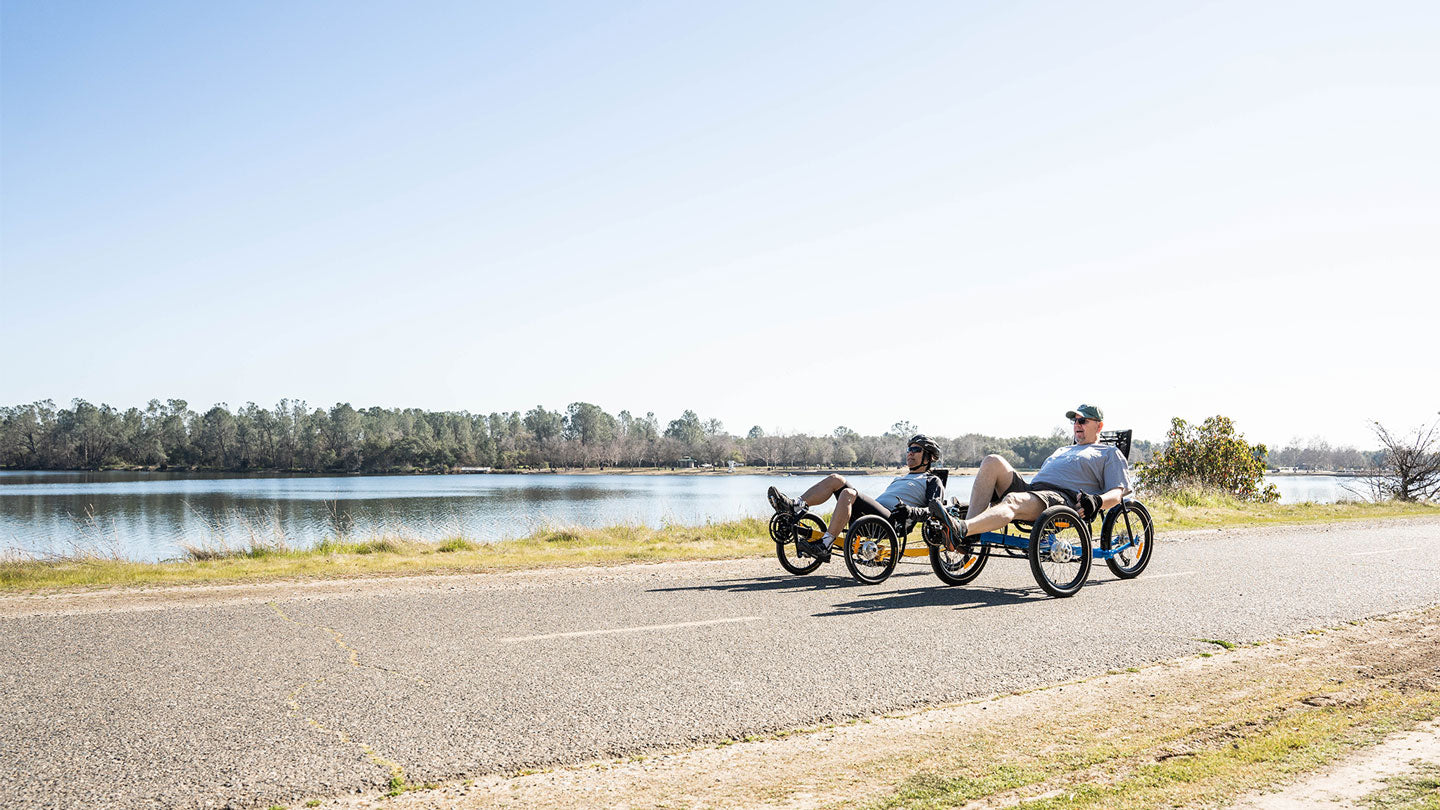
A recumbent trike fixes that in two moves. Three wheels, and a laid-back seat. Everything good about it comes from those two.
Why do three wheels matter as you get older?
On two wheels you have to balance. Every time you stop at a light or a corner, you're catching yourself, putting a foot down, holding the bike up. As we get older, that split-second of balance is exactly where the fear creeps in.
Three wheels take that off the table. You never balance, and you don't fall over at a stop. You sit low, with a low center of gravity, so the trike is stable and planted instead of tippy.
Riders think the tall upright bike is the safe one because it's what they know. In our experience it's the opposite. The higher, narrower bike is the one that puts you on the ground, and the low three-wheeler is the one that keeps you off it.
How does the recumbent seat change everything for an aging body?
This is the part most people miss. They think the fix is a squishier seat. It isn't.
The problem was never the cushion, it was the position.
On an upright bike your weight loads onto a little saddle, your wrists, your neck, and your lower back all at once. Five miles in, even a big padded seat stops feeling good, because everything else is still wrong.
A recumbent seat is a full seat with a backrest. It cradles your back, your hips, and your shoulders at the same time and spreads your weight across all of it, so nothing digs in, your wrists are free, and your neck isn't craned. Riders who come to us with one complaint, usually the back, are surprised to find the trike quiets down four or five aches they'd stopped mentioning.
It's also a genuinely good workout that's easy on the body. Cycling is low-impact and joint-friendly, which is why Harvard Health points people with joint or balance concerns toward tricycles for stability. You get the aerobic work and the leg strength without the pounding.
Are recumbent trikes good for seniors?
Yes. A recumbent trike is one of the best-fitting bikes a senior can ride, because it removes the two things that push older riders off a bike: balancing at stops and the hunched-over posture that loads the back, wrists, and neck. Riders we've fit in their 60s, 70s, and 80s regularly tell us they ride more on a trike than they ever did on their old bike, because it doesn't hurt the next day.
That last part matters more than anything on a spec sheet. People quit riding because they hurt afterward, so they skip the next day, and the day after that, until the bike is hanging in the garage.
When the ride doesn't cost you anything the next morning, you ride again. That day-after-day consistency, not any single ride, is what actually keeps you healthy.
Are recumbent trikes hard to ride or learn?
They're easier than the bike you learned on as a kid. You sit down, and you pedal. There's no balance to learn, because three wheels hold you up for you.
The one thing riders worry about is shifting. If that's you, you have options.
Plenty of trikes run simple gearing, and some can be set up with a single shifter or an internal hub that shifts for you, so there's one lever and nothing to overthink. On a proper fit we'll set the gearing to how you actually ride, not to a race you're not entering.
Are recumbent trikes safe and stable for older riders?
Stability is the whole design. You're low to the ground with a wide, three-wheel stance, so there's very little that tips a trike in normal riding. The lower you sit, the harder you are to knock over.
The one honest tradeoff is visibility. Because you sit low, you want to be seen. That's a solved problem.
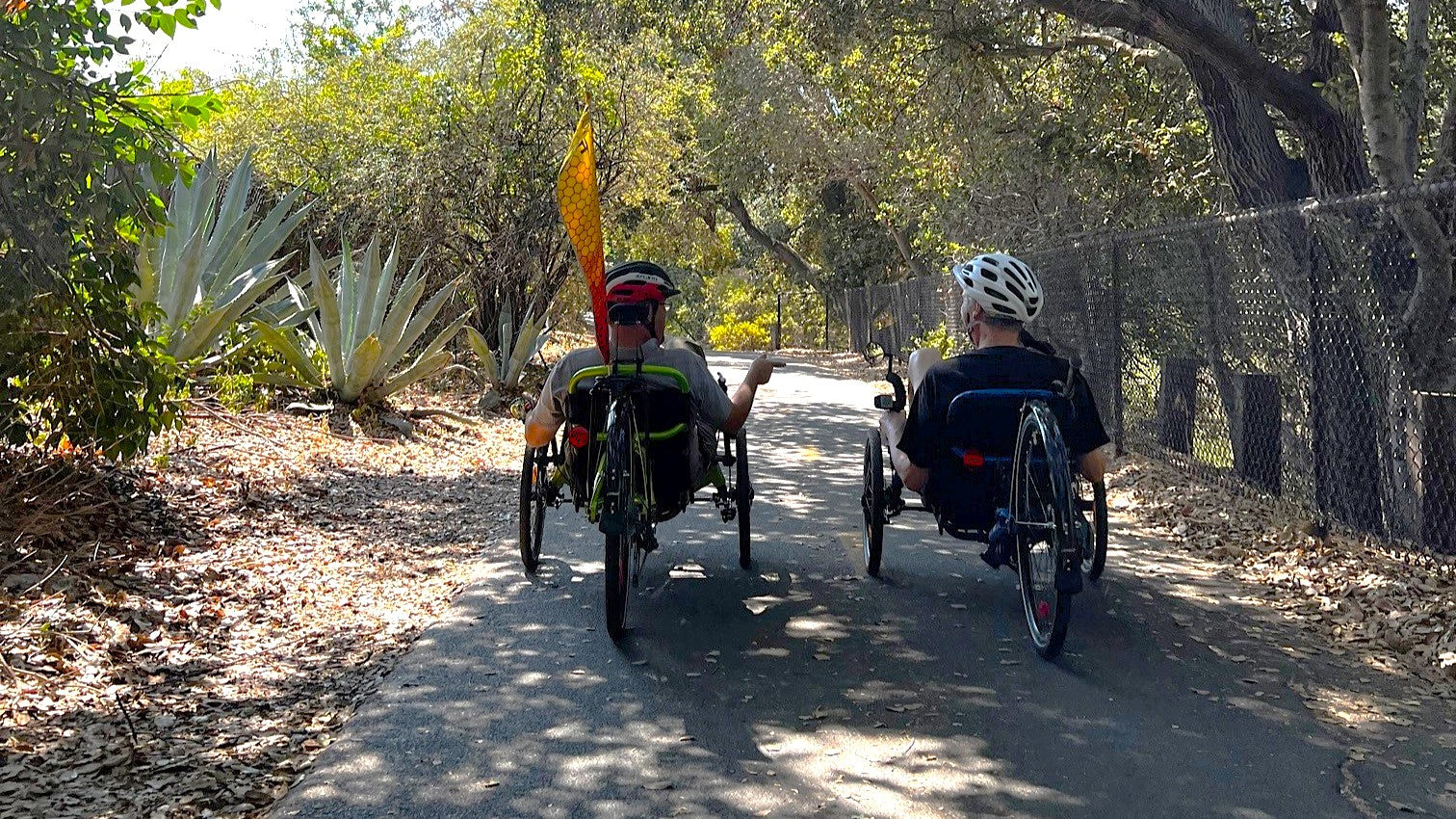
We put a tall safety flag on the back and a bright LED tail light, up to 450 lumens, that a driver can pick out from a long way off. Flag up, bright light on, ride defensively, and you're more visible than most upright riders on the trail.
How do you choose the best recumbent trike for a senior?
Here's where the honest answer separates from the listicles. The "best" trike isn't a model. It's a fit.
The same trike that's perfect for your neighbor can be wrong for you if your leg length, your reach, or your back is different. So before we ever talk models, we talk about your body.
How is a trike fitted to your body (X-seam and reach)?
The main measurement on a recumbent is your X-seam, the distance from the back of the seat to the pedals along your leg. It's the recumbent version of inseam and leg length, and it sets where the boom, the tube that carries the pedals, needs to sit so your legs extend right.
From there we set the seat recline angle, the boom length, and the brake lever reach so everything lands where your body wants it. We adapt the trike to you, not the other way around.
A trike that's dialed in disappears underneath you. A trike that isn't will give you back the same aches you got on the trike to escape. That's why we never sell one without fitting it.
Which steering is easier: under-seat or above-seat?
There are two main steering styles on a recumbent trike, and it's worth knowing the difference.
Above-seat steering puts the handlebars up in front of you, a bit like a normal bike. It's intuitive, and most people take to it instantly.
Under-seat steering puts the grips down low by your hips, so your arms rest relaxed at your sides while you ride. Riders with shoulder issues or limited overhead reach often find under-seat the more comfortable of the two, because your hands sit in a natural, dropped position.
There's no universal winner. It comes down to your shoulders and what feels natural when you're actually sitting in the seat, which is exactly what a fitting sorts out.
Do you need electric assist?
Maybe. If you've got hills, or you want more range than your legs give you right now, or your stamina isn't what it was, electric assist is a real answer. Pedal-assist adds power as you pedal, from either a mid-drive motor at the cranks or a hub drive at the wheel, and it flattens the hills without taking the ride away from you.
You don't have to decide today, and you don't have to over-buy. Electric assist for seniors is a big enough topic that it has its own guide, so we won't go deep here. On the fit call we'll tell you honestly whether your riding calls for it or whether you'll be happy without the extra cost.
Which recumbent trike is best for your specific issue?
Most guides stop at "trikes are comfortable" and never get specific. But the riders calling us aren't shopping in the abstract. They're shopping because of one thing: a back, a knee, a balance problem, a body that got heavier.
Here's how we think about each.
| Your issue | What to look for in the trike | Feature or assist to add |
|---|---|---|
| Bad back | Full recumbent seat with an adjustable recline; supportive lumbar area | Headrest for longer rides; suspension on rougher paths |
| Bad knees / after a knee replacement | Correct X-seam so knees don't over-bend or over-extend; easy, low gearing | Electric assist to spin easy gears with less load on the joint |
| Balance problems / stroke recovery | Maximum stability, low seat height, simple controls | Single-shifter or auto-shifting hub; parking brake |
| Heavier rider | Higher weight capacity, wider stance, sturdy wheels | Reinforced frame options; e-assist for range |
| Limited stamina | Comfortable seat you'll want to sit in for a while | Pedal assist to extend how far you can go |
What's the best recumbent trike for a bad back?
If the back is why you stopped riding, the recumbent seat is doing the heavy lifting. You want a full seat with an adjustable recline so we can set the angle that unloads your lower back, and often a headrest so you can rest your head on longer rides. The more you lean back, the more you'll want that headrest.
If the back is the whole reason you're shopping, I went deeper on it here: what I tell people with bad backs who still want to ride.
What's the best recumbent trike for bad knees or after a knee replacement?
Knees are all about the fit and the gearing. Get the X-seam right so the knee doesn't over-bend at the top of the stroke or lock out at the bottom, and give the rider easy gears to spin instead of grind. A lot of post-knee-replacement riders pair that with electric assist so they can keep the cadence high and the load low, which is easier on the joint.
What's the best recumbent trike for balance problems or stroke recovery?
This is where the trike shines and where we do some of our most rewarding work. We're a VA contractor, and we've fit riders coming back from strokes who were sure they'd never ride again.
They get on a trike, realize they don't have to worry about balance at all, and the whole thing opens back up. For these riders we prioritize maximum stability, a low seat that's easy to get into, and simple controls, sometimes a single shifter so there's less to manage.
What's the best recumbent trike for heavier riders?
Weight capacity and a sturdy build are the priorities here. You want a frame rated for your weight with margin to spare, a wide, stable stance, and strong wheels. We'll match you to a model built for it rather than one that's near its limit, and electric assist often makes sense to keep the range comfortable.
Which recumbent trike brands are best for seniors?
We stock all five of the major brands, so we're not talking you into a house model. Each one is genuinely good, and each has a personality. Here's the honest rundown, with real models we carry.
| Brand | Example models we stock | What it's known for |
|---|---|---|
| TerraTrike | Rambler, Gran Tourismo | Approachable, easy-riding trikes and a strong value at the entry end; a common first trike |
| Greenspeed | GT20, Magnum | Comfort-focused, well-sorted rides; the Magnum line suits a range of body sizes |
| Catrike | Expedition, MAX, Dumont | American-built aluminum trikes; the folding Dumont packs into a hatchback for easy transport |
| ICE | Adventure | Highly adjustable, touring-ready trikes with folding and suspension options for the long haul |
| AZUB | Ti-FLY 26" | Deeply customizable European builds; the Ti-FLY's full suspension smooths out rough surfaces |
Model years, spec, and sales all move pricing, so we keep it live on the site rather than pinned in a guide. Want to see the full lineup with current pricing? Browse the recumbent trikes we stock.
What is each trike brand known for?
If you're brand-new and price-conscious, a TerraTrike Rambler class is a friendly, capable place to start. If comfort over rough ground is your thing, the suspension on an ICE Adventure or an AZUB Ti-FLY is worth feeling. If you need to fold the trike into a small car, the Catrike Dumont is built for exactly that.
Greenspeed sits comfortably in the middle for a lot of riders who just want a well-mannered, comfortable trike. None of these is a wrong answer. The wrong answer is buying any of them without fitting it to your body first.
How much does a good senior recumbent trike cost?
A quality recumbent trike spans from an approachable entry point up into a premium, custom, and full-suspension range. Most riders land somewhere in the middle, for a comfortable, well-equipped trike they'll ride for years. Because model year, spec, and sales all move the number, we quote live rather than list it here.
What do you get in each price band?
| Price band | What you get | Who it suits |
|---|---|---|
| Entry | Solid, comfortable trike, straightforward gearing, proven frame | First-time triker, flat-to-rolling terrain, budget-conscious |
| Mid | Better components, more adjustability, folding or lighter frames, more comfort features | Most riders; the sweet spot for daily riding |
| Premium / custom | Suspension, top components, internal hubs, deep customization, touring readiness | Long-distance riders, rougher terrain, riders who want it dialed to the last detail |
I don't love talking about the higher numbers, because it's real money and I know it. But it's the same conversation I have on the phone: this isn't a bike purchase, it's a health tool you'll use most days for years. The riders who spend the most are usually the ones who already bought once and learned what they wished they'd added.
You don't have to undershoot to be smart, and you don't have to over-buy to be comfortable. You can dig deeper into cost in our complete guide to recumbent trikes.
What is the best recumbent trike for seniors overall?
Here's my honest answer after fitting riders on all five brands for over a decade. There is no single best recumbent trike for seniors.
The best one is the one fitted to your body, your back, your knees, your balance, and your reach. A Catrike, a TerraTrike, an ICE, an AZUB, and a Greenspeed can each be the perfect trike or the wrong one, depending entirely on who's sitting in the seat.
Why is the "best" trike the one fitted to your body, not the top of a list?
That's why I won't rank them one through five and send you off. It would be dishonest, and you'd probably buy the wrong fit. What actually gets you on the right trike is a real conversation about your body and how you want to ride.
That's what the Dream Trike Session is for. It's about an hour with me, by phone or video. I ask you the same questions I'd ask if you walked into the shop: what your back and knees are doing, why you want to ride, where you want to ride.
We build a shortlist of one to three trikes together, for your body and your budget, and I lock in a real quote on each before we hang up. You end the call knowing which trikes actually fit you and what each one costs.
You've earned a bike that fits where you are now. Let's find it together. Book your free Dream Trike Session and we'll build your shortlist.